
Will U.S. Tariffs Slow Down the Growth of the IT Industry? Here’s What You Need to Know
President Joe Biden’s 2025 tariff hike just sent shockwaves across the U.S. tech world. He confirmed a new round of tariffs on Chinese tech imports, including semiconductors and AI chips, that creates fresh debates across Silicon Valley. For many startups, especially those depending on overseas components, this is more than just a headline and a growing concern. As tensions rise between the U.S. and China, a bigger question appears: Are these tariffs a shield for local innovation or a barrier against global collaboration?
Trade policies do not work in isolation. Moves made in Washington affect factories in Shenzhen, startups in Toronto, and app makers in Texas. Former President Trump’s 2018 tariffs reshaped the tech trade map. Today, China remains a key exporter, Canada is rising as a North American buffer, and Trump’s aggressive policies have created long-standing effects on today’s markets. This blog breaks down what these tariffs mean for the IT sector, how they affect startups, and how business leaders can adapt to a changing global tech scene.
What Are Tariffs and Why Do They Matter?
Tariffs are government taxes placed on imported goods from other countries. These taxes increase the price of imports, especially when applied to hardware, circuit boards, or electronic parts. When applied to tech products, these taxes increase the cost of doing business. They influence everything from the price of raw materials to the final retail price of servers, chips, and mobile devices. For tech businesses, even a 5, 10% increase in component costs can change the game.
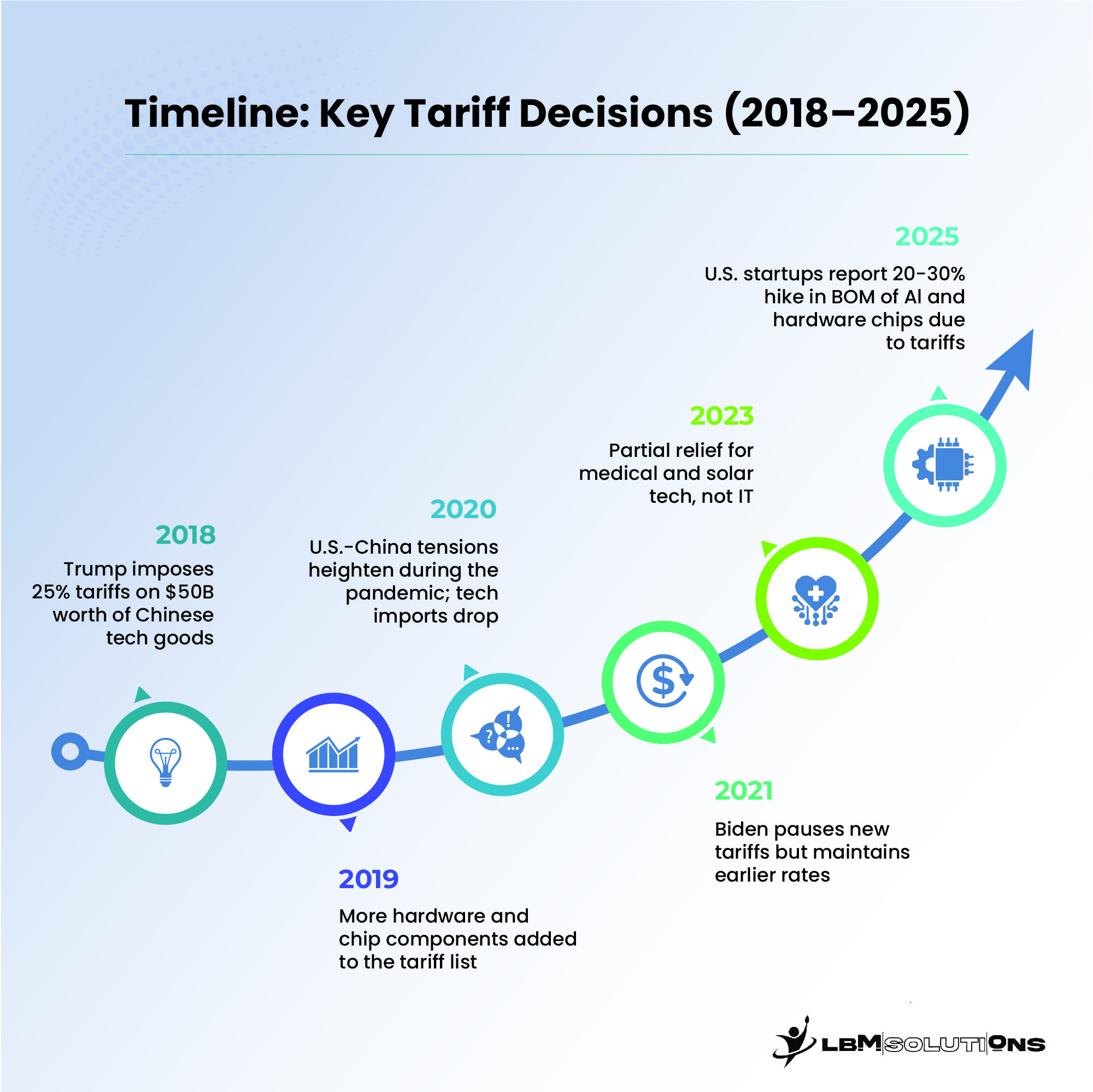
In 2018, President Trump added heavy taxes on many tech products made in China. The goal was to reduce imports and encourage more tech manufacturing inside the country. But this made life harder for startups. But, many startups could not switch that fast. They had to pay more for production. Their costs went up, and their products became more expensive. Consequently, That made Canada a smarter option for tech business. With Trudeau backing open trade and startup grants, Canadian tech zones like Ontario and Vancouver saw a rise in U.S. tech founders opening operations there.
However, Canada has stayed out of the fight now. It has become a safer place to send and receive tech goods. Some U.S. companies even look at Canada as a second base to avoid paying high import taxes.
The U.S.-China Trade War and Its Impact on the IT Industry
The U.S.-China tech rivalry began with tariff hikes on both sides. Trump raised the first flag with high taxes on Chinese tech goods. Now, Biden keeps the heat on with more focus on security and control over data and chip imports. Startups that depend on Chinese parts face real struggles. One founder from Austin shared, “We had to stop our smart wearable launch twice. Our sensors got stuck at customs. Then the tariffs raised our costs by 18%.”
These issues do not stop at the shipping port. The delays affect everything. It slows down production, many deliveries may miss deadlines, and clients may walk away. Startups with lean teams and limited funds often carry the heaviest burden.
Timeline: Key Tariff Decisions (2018, 2025)
Economic Ripple Effects: How Tariffs Affect the IT Sector’s Growth
Tariffs are not just taxes. They affect business growth in many ways, such as BOM (Bill of Materials) rise, slow supplies, and tough decision-making. The new businesses feel this pressure the most because they have less backup and fewer resources. Larger firms find ways to adjust, but smaller ones often pause, rethink, or even shut down.
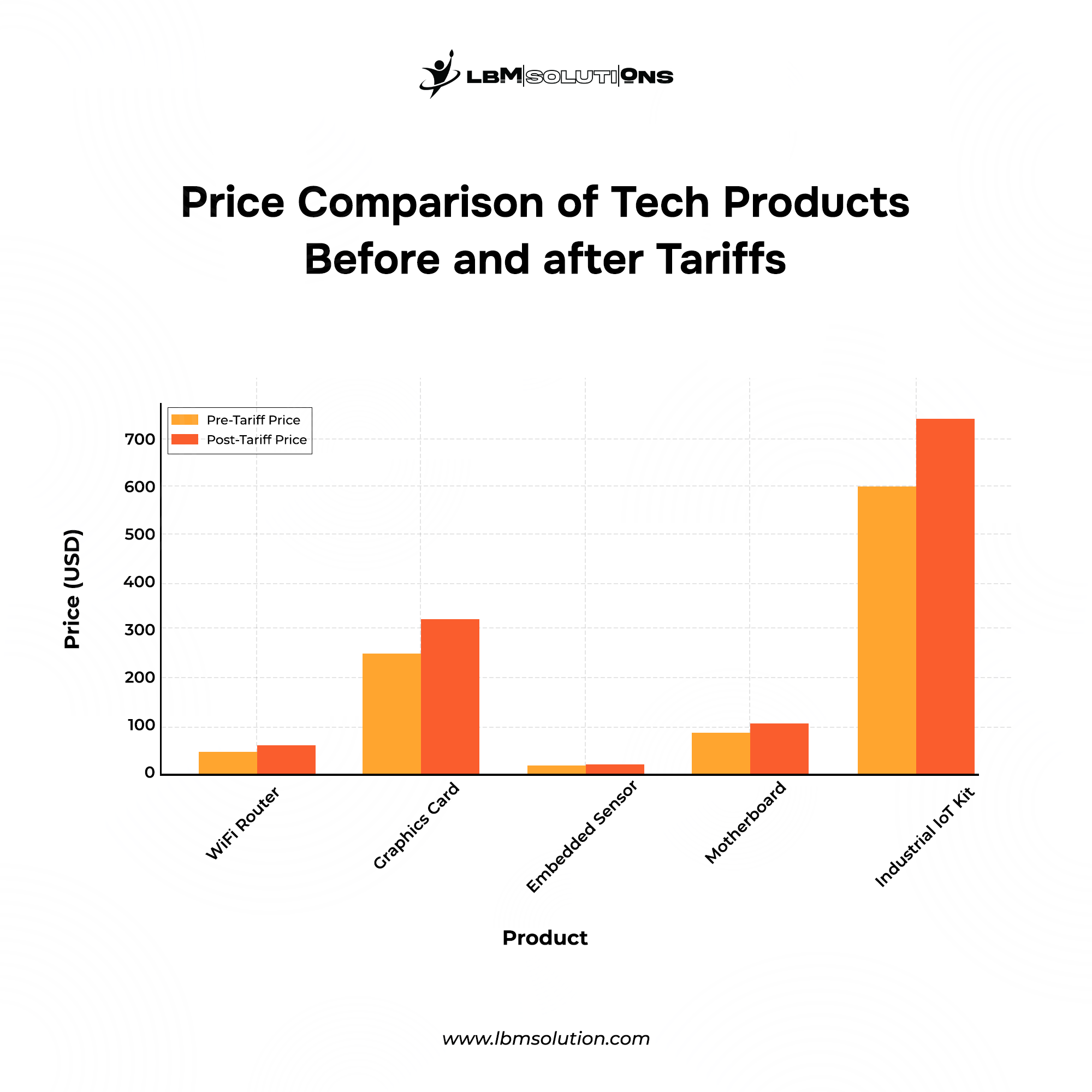
Hardware costs : Tariffs push component prices to new highs. Components like chips, Motherboards, GPUs, sensors, and routers now cost more. Higher import taxes raise BOM (Bill of Materials) costs by up to 30%.
Decreased Profit Margins : Even after price hikes, companies cannot pass all costs to customers. They face lower profit margins and it becomes challenging to stay competitive and sustainable.
Increased Production Costs : Every stage of production becomes more expensive with tariffs. From raw materials to final assembly, the increased costs have an impact on every aspect of manufacturing.
Supply Chain Disruptions : Key vendors in Asia face import restrictions. Some vendors may even stop offering services while businesses struggle to find affordable suppliers.
Market Access Restrictions : Tensions with China limit partnership. Some Chinese software and hardware are restricted from U.S. use. This limits choices and increases dependency on expensive alternatives.
Innovation Slowdown : Tariffs force companies to redirect funds away from research and development. They struggle to keep up with technological advancements and market demands due to restricted funds.
The North American Angle, Canada’s Advantage?
Canada stands out as a calm tech harbor in a stormy trade sea. It presents a rare advantage for tech startups. While the U.S. increases the tariffs, Trudeau keeps Canada’s trade gates open, especially for technology sectors. It has no aggressive tariff policies and supportive programs for innovation. Therefore, several U.S. firms now register Canadian subsidiaries to take advantage of these favorable conditions.
The trend of Nearshoring attains the attention of several entrepreneurs and businesses. Instead of relying on overseas factories, U.S. companies now partner with Canadian manufacturers for components and import them tariff-free across the border. This not only enhances the supply chain but also diminishes operational costs and makes it an attractive option for businesses. A KPMG survey indicates that over the next two years, the percentage of U.S.-serving supply chains located in North and South America will rise to 69% from 59%.
In addition, Trudeau’s administration also encourages tech partnerships. With incentives like grants, tax credits, and special startup visas, Canada is drawing in IT companies looking for a solid foundation. Several U.S. business founders are now relocating parts of their supply chains to Canadian cities like Toronto, Montreal, or Vancouver, where the logistics are smoother, and the benefits are clear.
What Should IT Startups and Tech Business Owners Do Now?
The tariff landscape keeps changing, and smart decisions need sharp preparation. Software development companies should know and discover every path to protect margins and maintain product quality. They need to shift their focus to cost stability, supplier flexibility, and smart international planning.
Supplier Diversification : One-country dependence creates risk. China offers value, but rising tariffs develop problems. Businesses must choose suppliers from various countries to build safety, avoid delays, and protect themselves from sudden cost changes and shipping issues.
Nearshoring Strategy : North American production brings flexibility. Canadian companies give tariff-free benefits and smooth shipping routes. Hence, U.S. startup,s and other companies can gain faster timelines, better coordination, and fewer cost shocks when supply chains stay close to home.
Policy Monitoring : Trade rules do not stay the same. Tariff updates affect budgets, supplier decisions, and pricing. However, regular updates from the USTR offer clear insights into changes that impact imports. It gives businesses time to plan, adjust forecasts, and stay ready for sudden changes.
Price Adjustment : Digital tools provide clear price comparisons. Business owners can get a better look at costs, explore supplier options, and manage orders quickly. Material prices can be tracked more easily when tech replaces manual work and offers faster decisions and fewer mistakes.
Software Investment : One country brings savings while another brings safety. Tech companies can choose both to create balance. As a result, they can avoid full exposure to tariffs, control delivery times, and protect product quality without depending on a single location for stable growth.
Conclusion
To conclude, U.S. tariffs have changed the global map for tech startups. From 2018 to 2025, a series of policy shifts, largely aimed at Chinese tech imports, have disrupted how companies source materials, set prices, and manage innovation timelines. These changes have raised production costs, delayed product launches, and pushed especially tech firms to rethink their manufacturing strategies. China continues to supply most of the world’s hardware. At the same time, the U.S. wants to reduce dependency but has not built a full replacement yet. In this gap, Canada now acts as a stable tech bridge, offering U.S. firms a practical and dependable alternative. Tech founders cannot afford to ignore tariff news because every policy tweak can affect profits, launches, and user experience. The smartest path is staying aware, flexible, and resourceful. Those who rethink their sourcing and prepare their pricing strategies today can still grow even in a tariff-heavy world.
Planning this work? Start with the crm buyer's guide.
As Chief Technology Officer at LBM Solutions, Manjit Parmar oversees technical strategy, infrastructure, and product development. His expertise in Blockchain and AI enables the creation of secure, data-driven, and scalable systems aligned with business growth and innovation.
Keep reading
SaaS vs AaaS: A Complete Breakdown of Both Models in 2026
Learn the difference between SaaS and AaaS, how AI agents work, and why businesses are shifting toward autonomous software systems.
The Real Guide to AI Real Estate App Development (2026)
Plan your AI real estate app in 2026, features, cost, tech stack & tips to find the right AI real estate app development company.
How Stablecoins Are Replacing Traditional Bank Accounts in 2026
Learn about How Stablecoins Are Replacing Traditional Bank Accounts in 2026. This comprehensive guide covers everything you need to know for beginners.
Build it with engineers.
Product engineering for fintech and SaaS, inside your stack and your repo.