
Business Startup Idea Validation Framework That Reduce Failure Risk
Startups usually kick off with a cool idea, but lots of them don't make it. I read that 90% of new businesses flop, and a big chunk of those (like 35%) fail because no one actually wants what they're selling. So, before you spend a bunch of time and cash, it's smart to make sure people will actually buy your thing. Lots of startups don't know the way to check if their idea is good.This guide can help founders come up with a plan to see if their idea is solid, so they don't crash and burn. It's all about setting yourself up for winning.
The Core Structure of the Startup Idea Validation Framework
Starting right means checking if an idea works where it matters - out there with real people. One way forward? Look closely at who might buy, what others offer, then test early versions while listening hard to responses. Sticking to these pieces helps new ventures spot hiccups before they grow, shape something useful, match actual demand - cutting guesswork along the way.
Identifying the Main Problem
Start somewhere real. Most folks want fixes they can touch - Nielsen found 63 percent lean toward companies tackling actual issues. Spotting what others miss becomes your edge. Dig into frustrations, daily hiccups, silent gripes. Think back: Airbnb bloomed when its creators saw travelers stuck without cheap, comfy places to crash. One way they tackled the issue was by letting folks list empty rooms instead of opening regular hotels. A network of 10 million users logs on each month, tied to a company valued at 75 billion dollars. That leads to one key thought for entrepreneurs: what exact need does their offering meet? Focus has to center tightly on that challenge - nothing else fits.
Solution Development Building an MVP
Next comes building something small but working - just enough to see if people actually need it. A barebones version helps new teams check their ideas with real customers, without spending too much time or money. Instead of loading it with extras, the focus stays on solving one clear issue. According to ProductPlan research, companies who go this route spend sixty percent less on development. They also learn what works - straight from users - while still early in the game. This way, guesses get replaced by actual experience before anything scales. A fresh start can show what works. Picture Zappos, selling shoes online. Back then, just a basic site went live. Photos came from nearby shops. Orders got handled as they arrived. That stripped-down version proved people wanted it. By 2008, revenue hit a billion dollars. Founders need to check if their first product fixes something real for users.
Market Research: Understanding the Market
Market research is another integral aspect of knowing the preferences and demands of customers and the competition as well, when judging or considering the feasibility of the idea for the startup. When the MVP model is put into practice, it becomes essential for entrepreneurs to perform a validation survey and interview related to the business idea and compete analysis to determine the likes and dislike of users for your product, improvement areas, unserved functionalities, and finally acquire information about the demand for that product or service in the market. According to Gartner, about 56% of companies that perform valid research beat the competition. A renowned company that practices research for idea validation is Uber. At first, Uber performed research through survey and interview processes related to urban transport problems.
Leveraging Resources: Tools and Technologies
What if tech wasn’t just helpful but essential for testing a new business? Tools pop up everywhere letting startups check whether an idea works before going all-in. Instead of guessing, teams dig through piles of data to spot real patterns in what customers want. Less grunt work, fewer mistakes - that kind of shift changes everything quietly. One study from McKinsey found companies leaning on artificial intelligence cut down time to decide by nearly one-third. That speed means adjusting course feels less like failure and more like moving forward differently. When you get clear signals from data, it changes how fast you move. Tools such as Google Trends show what people search for right now. That kind of info shapes decisions without waiting. Watching online conversations reveals what rivals are doing this week. Speed matters when starting something new.
Business Model Validation: Ensuring Financial Viability
One study found companies using tested pricing methods grow income about twenty percent more. What keeps a company earning money over time? A working business design. Making sure prices match what buyers expect matters just as much as how costs are managed. Getting these pieces to fit together shows whether a product can survive financially from the start. It also reveals if people will actually pay for it. Take LinkedIn. Their path offers clear clues on why balance between price, value, and expense counts. Starting out, people could sign up and link up at no cost, then paid options came along offering extra tools. Because of this, new companies should mix price experiments into how they check if their idea works, helping shape what they sell and keep money flowing steady.
Risk Analysis and Mitigation
Every new business carries some danger. Yet going step by step with clear checks cuts down big mistakes. Looking into problems ahead of time matters - talking to people who might buy helps see what could go wrong. Learning from reactions means changes happen sooner, not later. Trying things out quietly, maybe showing just a few folks or using a stripped-down model, often shows surprising truths. When done this way, guessing less means building something people actually want. When founders test their ideas clearly, they rely less on guesses. That kind of structure keeps them from wasting time and money. Following a path that checks facts early shapes better outcomes. Confidence grows when real feedback supports the concept. Success becomes more likely, not because of luck, but through steady verification.
Key Factors to Evaluate Your Product Idea for Success
Every startup idea needs thorough evaluation across critical areas to reduce risks and ensure success. So, founders must focus on market fit, technical feasibility, financial viability, and customer validation to build a strong foundation.
Market Fit: Your product must solve a real problem for a specific audience. A clear problem-solution match ensures relevance and creates demand in the market.
Technical Feasibility: Assess your team’s ability to develop and deliver the product using available technology, skills, and resources without significant hurdles.
Financial Viability: Strong financial foundations are essential for profitability. Analyze if your product can generate enough revenue to cover costs and support long-term business sustainability.
Customer Validation: Gather feedback from target customers to confirm product demand, improve its features, and align it with user expectations for maximum impact.
You can use business validation tools, like customer feedback platforms and financial modeling software, to assess each of these criteria.
Benefits of Using the Startup Idea Validation Framework
A structured business idea validation framework helps startups test their business concepts effectively. It ensures ideas align with market needs and business goals and helps entrepreneurs make informed decisions and avoid costly mistakes during product development.
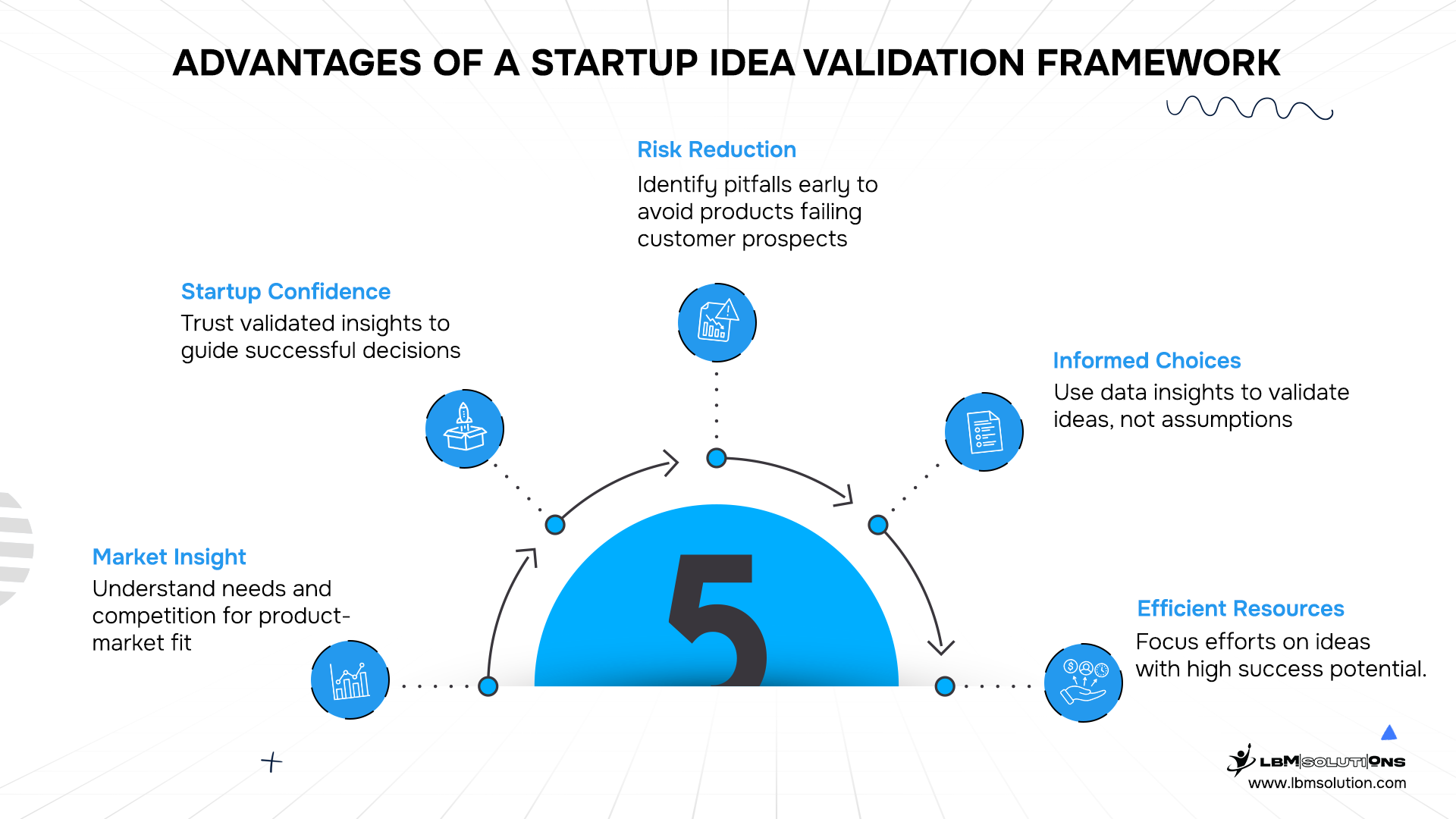
Reduce Risk: Identify potential pitfalls early and avoid launching products that fail to meet market expectations or solve real customer problems effectively.
Informed Decisions: Use reliable data and insights to decide the viability of your idea instead of relying on guesses or assumptions about the market.
Resource Allocation: Focus time, money, and team efforts on ideas that show strong potential to succeed, improving overall efficiency and results for the business.
Market Clarity: Understand customer needs, competitive landscapes, and market opportunities to ensure your product fits the demand and aligns with target audience expectations.
Boost Confidence: Build trust in your startup journey by ensuring your decisions are based on validated insights, providing clear direction and better decision-making.
How to Avoid Pitfalls and Prevent Product Failure
Startups often face failures due to common mistakes such as skipping research or ignoring valuable feedback. To avoid these pitfalls, founders must follow the below-given steps.
Test product ideas and assumptions with real users to confirm the demand before full-scale development.
Focus on solving problems that customers care about, ensuring your product provides value and addresses pain points.
Study competitors’ strategies and products to spot opportunities and avoid repeating mistakes they made.
Set realistic goals and timelines and avoid overconfidence in product capabilities before validation.
Concentrate on core features and avoid adding unnecessary extras without confirming their demand from customers.
Adapt your business model, product, or approach when feedback reveals areas for improvement or innovation.
Final Remarks
Starting a business without checking if the idea works? That rarely ends well. Figuring out flaws early means fewer headaches later. Some try guessing what people want - others just ask them directly. Surveys might seem basic, but they often reveal surprising truths. Machines parsing feedback can spot patterns humans miss. Testing small versions of your product tells you whether anyone actually needs it. A solid team doesn’t just code - they shape raw concepts into something sturdy. When builders understand user pain points, outcomes shift dramatically. Ignoring reality at the start usually leads to empty shelves down the road.
Planning this work? Start with the crm buyer's guide.
As Chief Technology Officer at LBM Solutions, Manjit Parmar oversees technical strategy, infrastructure, and product development. His expertise in Blockchain and AI enables the creation of secure, data-driven, and scalable systems aligned with business growth and innovation.
Keep reading
SaaS vs AaaS: A Complete Breakdown of Both Models in 2026
Learn the difference between SaaS and AaaS, how AI agents work, and why businesses are shifting toward autonomous software systems.
The Real Guide to AI Real Estate App Development (2026)
Plan your AI real estate app in 2026, features, cost, tech stack & tips to find the right AI real estate app development company.
How Stablecoins Are Replacing Traditional Bank Accounts in 2026
Learn about How Stablecoins Are Replacing Traditional Bank Accounts in 2026. This comprehensive guide covers everything you need to know for beginners.
Build it with engineers.
Product engineering for fintech and SaaS, inside your stack and your repo.