
Lean Startup Methodology in Software Development: A Practical Approach
Are you spending numerous hours and resources to build software, only to find that users are indifferent after launch? Well, that is a common situation among several businesses. According to Startup Genome, 74% of startups fail due to premature scaling. So, how can you avoid this costly mistake? The answer lies in lean startup methodology, a structured approach to developing software that is truly a product-market fit. Instead of relying on assumptions, this methodology includes experimentation, user feedback, and continuous iteration to create products that actually solve real problems. This blog will delineate what the lean startup model is, its core principles, and actionable steps to develop leap software with less risk and higher success rates. Whether you are a startup founder or a product manager, this guide will help you build with confidence.
What Is the Lean Startup Methodology?
Starting with small steps, the Lean Startup Methodology builds software fast through constant testing with actual people. Written down by Eric Ries in 2011, his book gave companies a path to build products without extra waste. Instead of guessing, teams try quick experiments while listening closely to what customers say. Over time, changes stack up - each one shaped by real reactions rather than assumptions.
Inspired by the lean manufacturing principle, it emphasizes learning over guesswork. Today, this model is widely adopted in AI-driven software development and tech startups. Instead of investing years in development, teams test ideas quickly and adjust based on data. This method reduces risks and increases the chances of success. Businesses that develop lean software can adapt to market changes faster and build products that users actually want.
Core Principles of Lean Startup Methodology To Build Software
Startups move faster when they test ideas early. A focus on quick changes keeps them close to what users actually need. Learning comes from trying small pieces instead of waiting. What works gets kept others get dropped. Progress shows up in adjustments not plans. Mistakes become useful only if spotted fast. Building something people want matters more than perfect design.
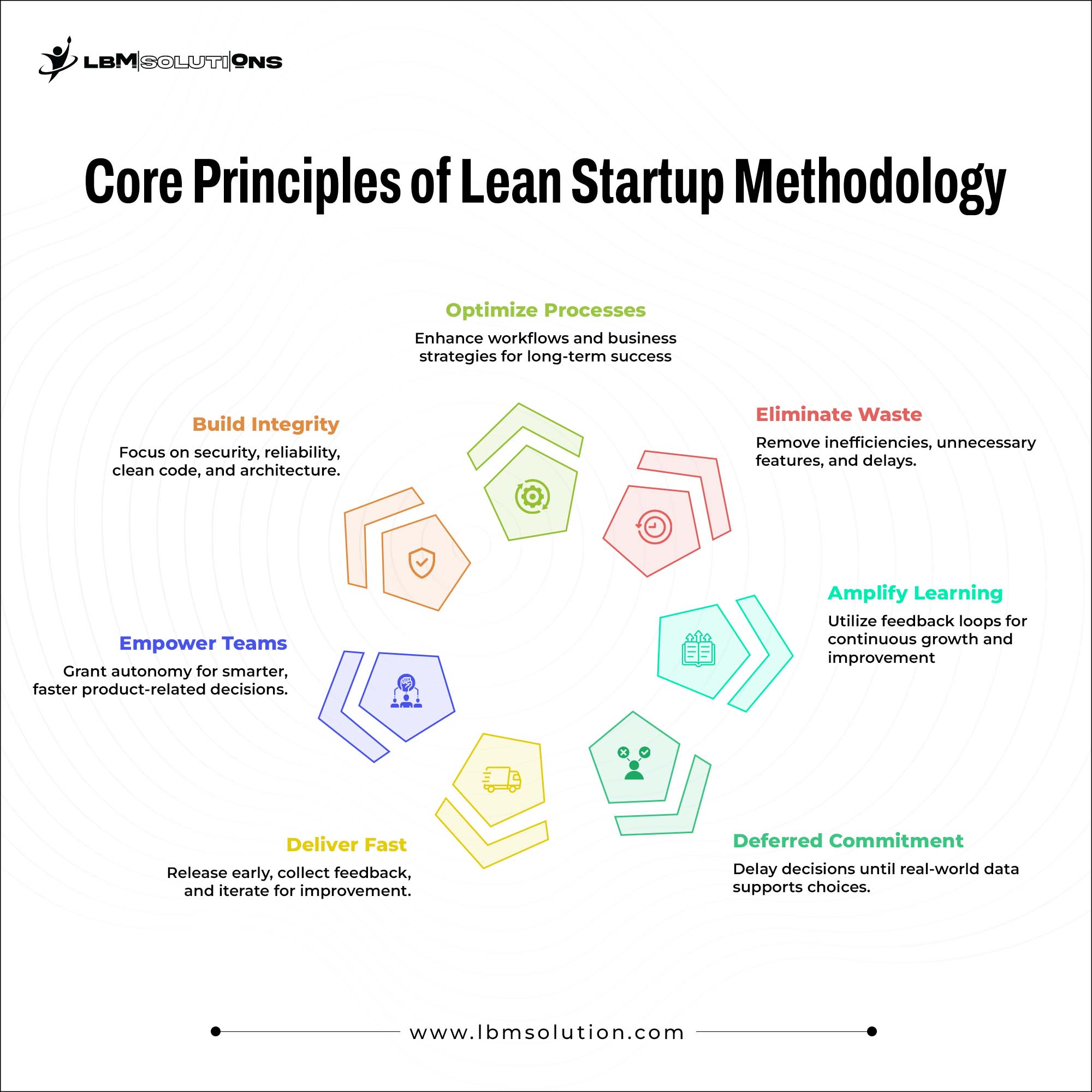
Eliminate Waste : The lean software development process removes the seven wastes: overproduction, waiting, unnecessary features, inefficient processes, task switching, defects, and unused knowledge.
Amplify Learning : Teams can consistently analyze product features and improvements with the Build-Measure-Learn Cycle and gain deep understanding to better meet customer needs and market expectations.
Decide Late (Deferred Commitment): Teams delay critical decisions to collect more data. Lean software building process gathers real-world data before making critical choices. This approach reduces costly rework.
Deliver Fast: Early releases give quick feedback. Regular updates keep the software relevant, shorten cycles, and quickly align product improvements with customers’ genuine needs and preferences.
Empower the Team : It offers autonomy to make product-related decisions independently. Developers, designers, and managers make smarter choices when trusted to build and refine products.
Build Integrity In : A strong software foundation prevents future problems. The lean startup method allows experts to focus on reliable architecture, clean code, and security from the start while developing software.
Optimize the Whole : A great product is more than code. Lean startups refine workflows, customer experience, and business strategies to build sustainable success.
Why Your Startup Needs Lean Software Development
Imagine you walk into a restaurant, order food, and wait for an hour. When it arrives, it is cold and tastes awful. That’s quite frustrating, right? Startup owners face the same issue when software takes too long, includes unnecessary features, or misses user needs. Lean software development comes from the Lean Manufacturing principles of Toyota. It removes inefficiencies, encourages fast feedback, and creates software on a tight budget. Small, manageable releases allow developers to make improvements based on real user responses instead of assumptions.
A good example is how Tesla does things. Rather than pack each car full of features right away, they send regular software upgrades that boost speed and unlock functions later. These changes hold people's interest while making the cars better over time. Thanks to wireless updates, drivers save roughly $1,300 on upkeep across the board. Performance gains reach as high as ten percent just from smart coding tweaks.
Practical Steps to Implement Lean Software Development
Trying to build software without checking things along the way? It's like tossing darts blindfolded. Sure, one might land near the bullseye now and then - yet who knows if that spot even matters. The Lean Software Development Life Cycle focuses on moving fast without dragging extra weight. Waste gets cut, choices rely on real numbers, not guesses. Step follows step, each one tightening the loop a little more.
Define and Test Hypotheses
Before jumping into development, founders should take a step back and clearly outline their assumptions about the needs and pain points of customers and offer features in software that will solve their problems. Instead of relying on gut feelings, they should run small, focused experiments, such as surveys, interviews, or quick prototypes, to validate your software ideas. In this way, they can avoid wasting time on features nobody wants.
Validate Before You Build
Start by checking your guesses. Only then look at whether people actually want what you’re offering. Skip building the whole thing right away. Try tossing up a rough sketch, mock-up, or single webpage instead. That way, responses come in before time vanishes into lines of code. Learning happens quicker when changes arrive sooner. Not seeing excitement from others? Good. Knowing now beats pouring months down a path nobody follows.
Build a Simple MVP
After validating your software idea, it is time to build, but not everything at once. Founders should focus only on the core features that solve the primary problem. This Minimum Viable Product (MVP) should be functional enough for real users to test and provide valuable feedback. The goal is not perfection; it is to release something usable and refine it based on actual user needs.
Measurement & Analytics
Once the MVP is live, the focus shifts to tracking how users interact with it. Businesses must use specific lean software development metrics to track user engagement, customer satisfaction, and feature performance. Accurate measurements highlight improvements, pinpoint issues, and directly inform your next development steps clearly and rapidly. Founders should rely on real data to understand which product works and which does not.
Analyze and Iterate Quickly
User feedback is a goldmine, but only if it’s acted upon. Instead of waiting for a “big update,” founders should continuously refine their product, resolve problems, and optimize the software regularly. Speed matters a lot in software development. The faster the product adapts, the more valuable it becomes to its users.
Scale Based on Validated Learning
Founders who rush into growth too soon often stumble. Only when people keep using the product, key functions prove useful, and the right customers respond clearly - only at that point does expansion make sense. Adding tools, strengthening systems, or aiming wider works best when real usage supports each step, not guesses about what might happen.
Lean Software Development Vs. Agile Software Development Methodology
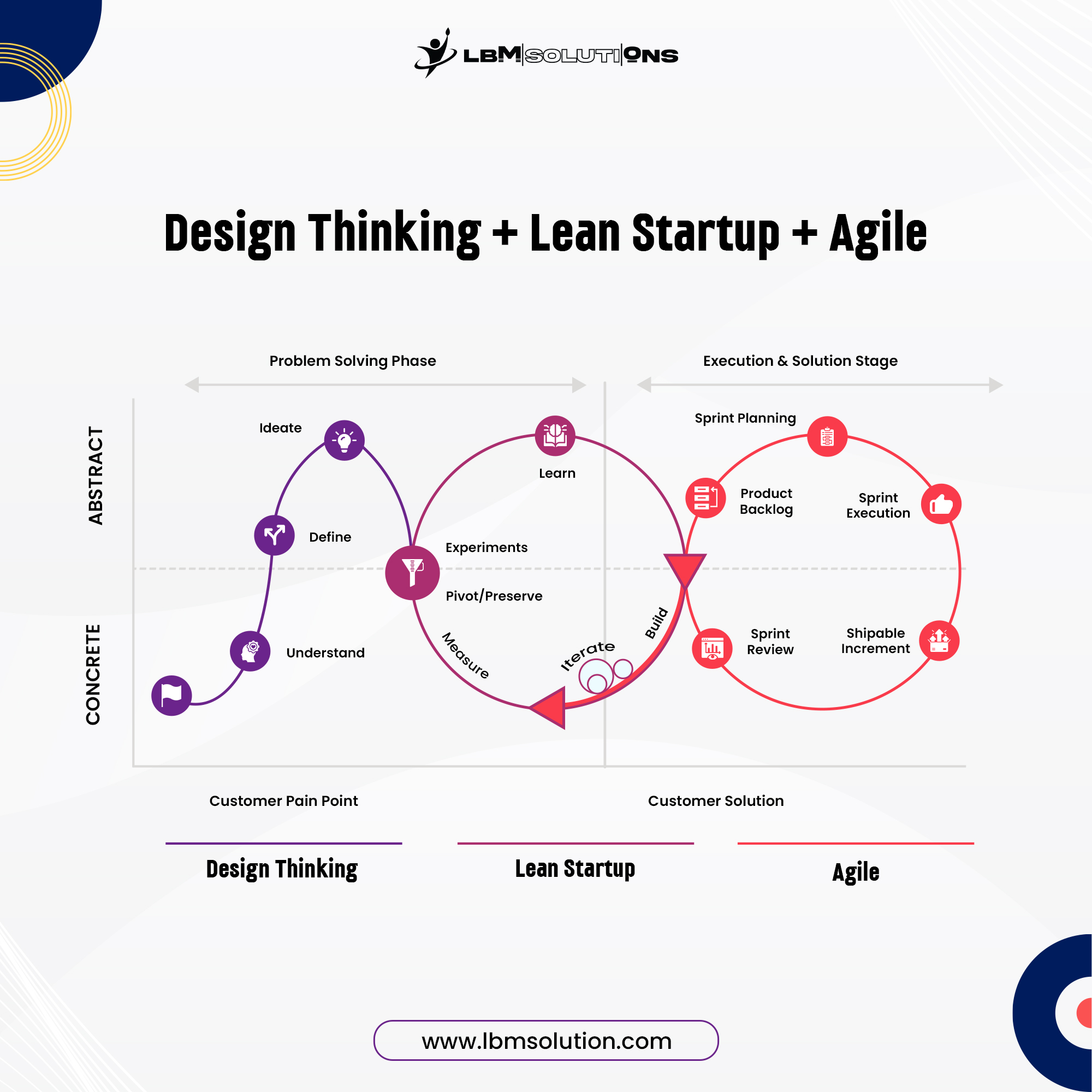
Lean Software Development and Agile each represent a distinct development methodology. The initial technique aims to reduce waste through rapid validation and user-focused improvements. On the contrary, agile methodology emphasizes frequent incremental releases, continuous collaboration, and adapting swiftly based on stakeholder feedback and project changes. Both methodologies focus on flexibility and rapid development, but they have key differences:
Common Mistakes to Avoid When Applying Lean Methodology
Startups often misinterpret lean principles and face costly software development pitfalls. They can avoid these mistakes if they are earlier aware of them to ensure efficient growth and product success while following the lean methodology. Here are a few mistakes that startups cannot afford to ignore:
Assumptions without real user feedback cause poor understanding and result in frequent, unnecessary product failures.
Excessive features and complicated development consume valuable time and delay achieving clear product-market alignment quickly.
Decisions without reliable user data create unclear priorities, resulting in product improvements without genuine value.
Early expansion of software products often drains vital resources, making failure more likely for startups.
Product ideas without connection to genuine customer problems create limited value, reducing market adoption considerably.
Conclusion
In short, if you build software without talking to your users, you're wasting time and money. The lean startup way stops this by keeping you learning, improving fast, and cutting out the junk. Startups that use Build-Measure-Learn make stuff people actually want. Ideas like cutting waste, getting things out fast, and using data make success much easier. Dropbox is a good example of how testing ideas early pays off. If you're trying to make software that fits the market, these steps can help you build it smarter and faster. Plus, a good software team can really help make your idea real.
Planning this work? Start with the crm buyer's guide.
As Chief Technology Officer at LBM Solutions, Manjit Parmar oversees technical strategy, infrastructure, and product development. His expertise in Blockchain and AI enables the creation of secure, data-driven, and scalable systems aligned with business growth and innovation.
Keep reading
SaaS vs AaaS: A Complete Breakdown of Both Models in 2026
Learn the difference between SaaS and AaaS, how AI agents work, and why businesses are shifting toward autonomous software systems.
The Real Guide to AI Real Estate App Development (2026)
Plan your AI real estate app in 2026, features, cost, tech stack & tips to find the right AI real estate app development company.
How Stablecoins Are Replacing Traditional Bank Accounts in 2026
Learn about How Stablecoins Are Replacing Traditional Bank Accounts in 2026. This comprehensive guide covers everything you need to know for beginners.
Build it with engineers.
Product engineering for fintech and SaaS, inside your stack and your repo.